
The Guardian of the Garden: A Deep Dive into Stinging Nettle
Strength, Sacrifice, and Renewal
Stinging Nettle (Urtica dioica) is more than just a weed that bites. It is a nutritional powerhouse, a textile miracle, and a legendary protector in folklore. Whether you are drinking its mineral-rich tea or using it to heal the skin, Nettle demands one thing from us: Mindfulness.
🌿 The Chemical Offerings
For your YouTube deep-dive, here is a summary of the "Anti-Everything" properties we discussed:
- Nutritive: High in Iron, Calcium, and Vitamin K.
- Anti-Inflammatory: Inhibits inflammatory cytokines to help with joint pain.
- Antihistamine: Naturally blocks the body's allergy response.
- Diuretic: Flushes the kidneys and reduces water retention.
🛠 The Apothecary: Nettle Recipes
1. The Revitalizing Nettle Tea
A simple internal tonic for "building the blood" and clearing winter sluggishness.
- Preparation: Place 1–2 tablespoons of dried Nettle leaf (or a handful of fresh) in a jar. Pour 8 oz of boiling water over the leaves. Cover and steep for at least 10–15 minutes (or overnight for a "Strong Infusion").
- Dosage: Drink up to four cups a day.
- The Method: Sip slowly to allow your body to absorb the high mineral content.
2. Nettle Footbath (For Corns & Circulation)
This traditional method uses an infusion to treat stubborn foot issues.
- Ingredients: Fresh stinging nettle stems and leaves, or dried (1 cup) and 1 gallon (5 liters) of cold water.
- Preparation: 1. Place the nettle stems and leaves into the cold water. 2. Soak for 12 hours. 3. Gently heat the mixture (do not boil).
- Application: Bathe your feet for 20 minutes. Keep the plant material in the water during the soak for maximum potency.
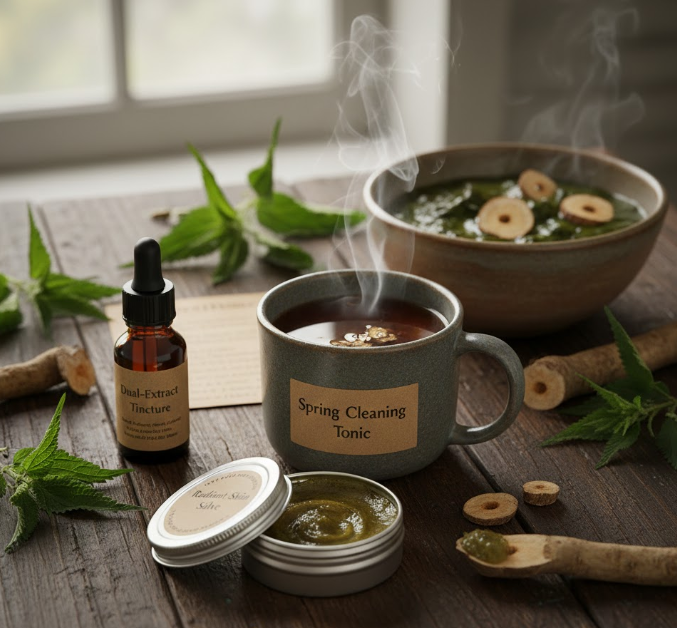
3. Nettle Tincture (External Remedy)
A potent extract specifically used for treating corns, skin irritations, and scalp health.
- Ingredients: * 1 cup of dried Nettle leaves (spring or autumn harvested).
- 75-95% grain alcohol (such as Everclear).
- Preparation: 1. Place the dried nettle leaves into a clean glass jar. 2. Cover the leaves completely with the grain alcohol, ensuring there is at least an inch of liquid above the herb line (leaves will soak up the alcohol!). 3. Seal the jar tightly and store in a warm, dark place for at least 2 to 4 weeks, shaking the jar daily.
The Master’s Press: Straining Your Tincture
To get every last drop of your "Menstruum" (the medicinal liquid), follow these steps to ensure no medicine is wasted:
- The Preliminary Strain: Pour the contents of the jar through a fine-mesh stainless steel strainer into a clean glass bowl to catch the bulk of the herbs.
- The Press: Place the remaining wet herbs (known as the "Marc") into a piece of cheesecloth or a clean muslin bag.
- The Squeeze: Twist the cloth tightly and squeeze with all your might! The most potent part of the tincture is often trapped inside the plant fibers. These final "heart drops" are the most concentrated part of your remedy.
- The Final Filter (Optional): If you want a crystal-clear tincture with no sediment, run the liquid through a paper coffee filter. This process is slow, but it results in a beautiful, professional-looking extract.
- Application: Using a cotton swab, apply the finished tincture to the affected area several times a day.
- Storage: Store in a dark amber glass bottle away from direct sunlight. High-proof tinctures like this can last for 3–5 years.
🍯 The Green Guard: Nettle Healing Salve
Best for: Joint stiffness, insect bites, dry/cracked skin, and minor burns.
Phase 1: The Infused Oil
Since you have a 1 lb bag of dried Nettle, the Heat Infusion method is the fastest way to get started.
Ingredients:
- 1 cup Dried Nettle Leaf.
- 1.5 cups Carrier Oil (Olive oil is classic; Sweet Almond oil is lighter for the skin).
Preparation:
- The Double Boiler: Place the dried nettle and oil in a heat-proof glass jar. Set the jar inside a saucepan filled with a few inches of water (or use a dedicated double boiler).
- The Slow Simmer: Heat on low for 2–3 hours. You want the oil to get warm and turn a deep, forest green, but never let it boil. Boiling will "cook" the herbs and destroy the medicine.
- The Strain: Using the same "Master's Press" technique from your tincture (Step 3 in your previous notes), strain the oil through a cheesecloth into a clean bowl. Squeeze hard to get those potent "heart drops"!
Phase 2: Making the Salve
Now, we turn that medicinal oil into a portable, shelf-stable balm.
Ingredients:
- 1 cup Nettle Infused Oil.
- 1/4 cup Beeswax Pellets (adds the "grip" and a protective barrier).
- Optional: 10–15 drops of Lavender or Peppermint Essential Oil.
Preparation:
- Melt: Return your strained Nettle Oil to the double boiler. Add the beeswax pellets.
- The Spoon Test: Once the wax is fully melted, dip a cold metal spoon into the liquid and set it aside for a minute. If the salve is too soft, add a few more beeswax pellets. If it's too hard, add a splash more oil.
- Pour: Remove from heat. If using essential oils, stir them in now. Pour the liquid immediately into clean tins or glass jars.
- The Set: Let the jars sit undisturbed for 1–2 hours until they are solid.
🩹 Why This Salve Works
- The Nettle: Acts as a natural antihistamine and anti-inflammatory, calming the "fire" of stings and rashes.
- The Beeswax: Creates a breathable "shield" on the skin, locking the nettle's nutrients in while protecting the area from the elements.
- The Nutrients: Delivers Silica and Magnesium directly to the skin, which helps with anti-aging and tissue repair.
📜 The Wisdom of the Ages: Nettle Folklore
The "Iron" Spirit: Native American Traditions
In the Pacific Northwest, the Coast Salish people saw Nettle as a provider. They twisted the inner fibers into twine so strong it could hold a harpoon or a salmon net. For the hunters, Nettle was a "stimulant of stamina," rubbed on the legs to keep blood flowing during long mountain treks. In rites of passage, the sting was a teacher—helping young men find a calm center in the face of physical pain.
The Weaver’s Sacrifice: European Tales
In Hans Christian Andersen’s "The Wild Swans," the heroine must knit shirts of stinging nettles in total silence to save her brothers. This story perfectly captures the Nettle’s essence: it requires endurance, but the reward is the breaking of curses. In German homes, it was thrown into the fire to ward off lightning, believed to possess the "Iron Spirit" of the planet Mars.
The "Nettle Sheets" of Scotland
The Scots were masters of the "Kailyard" (kitchen garden), and Nettle was their favorite textile. Nettle cloth was once considered softer and more durable than linen. As the poet Thomas Campbell once noted, Nettle sheets were "cooler and softer than any other." On Beltane (May Day), it was mandatory to drink Nettle tea to purge the blood and prepare for the summer's toil.
💡 Pro-Tip: Seizing the Nettle
Folklore suggests that the Nettle doesn't sting out of malice, but to demand respect. If you grab a nettle firmly and quickly (downward with the direction of the hairs), you often won't get stung. This is a powerful metaphor for life: Face your difficult problems head-on and "Seize the Nettle."
🍲 Culinary Medicine: Turning "Sting" into "Sustenance"
Most people run away from Nettles in the wild, but in the kitchen, we run toward them! Often called a "Superfood in Disguise," Nettle is a culinary powerhouse. Once heat or water touches the leaves, the "sting" is deactivated, leaving behind a flavor that is earthy, bright, and similar to a very rich spinach.
1. Traditional Highland Nettle Soup
The "Blood Purifier" of the North
This recipe traces its roots back to Scottish folklore, where it was served as a restorative meal to shake off the sluggishness of winter. It is creamy, comforting, and remarkably vibrant.
- Prep time: 10 mins | Cook time: 20 mins
- Serves: 4
The Ingredients:
- 6 oz young Nettle tops (washed and destemmed).
- 1 tbsp Butter or Olive Oil.
- 1 Onion, finely diced.
- 1 large Leek, sliced.
- 2 Potatoes, cubed (the secret to a naturally thick texture).
- 1 quart Vegetable or Chicken Stock.
- A splash of Heavy Cream or Greek Yogurt for finishing.
- Salt & Pepper to taste.
The Preparation:
- The Base: Melt butter in a large pot. Sauté the onion and leek with a pinch of salt until they are soft and translucent.
- The Simmer: Add the cubed potatoes and stock. Bring to a boil, then reduce heat and simmer for about 15 minutes until the potatoes are fork-tender.
- The Wilt: Add your Nettle leaves. Simmer for just 2–3 minutes. This is the "magic moment" where the sting disappears but the nutrients stay vibrant.
- The Purée: Use an immersion blender to blend the soup until it is silky smooth and emerald green.
- The Finish: Stir in your cream or yogurt, season with pepper, and serve with a thick slice of crusty bread.
2. Wild "Iron-Blast" Nettle Pesto
A Nutrient-Dense Twist on a Classic
Why use basil when you can use a leaf that packs three times the iron? This pesto is a modern apothecary favorite—perfect for tossing with pasta, spreading on sandwiches, or dolloping into grain bowls.
The Ingredients:
- 2 cups Nettle leaves (blanched and squeezed dry).
- 2 cloves Garlic (roasted for sweetness or raw for a kick).
- 1/2 cup Toasted Pumpkin Seeds or Walnuts.
- 1/2 cup Extra Virgin Olive Oil.
- 1/4 cup Parmesan Cheese (or Nutritional Yeast for a vegan version).
- A squeeze of fresh Lemon Juice.
The Preparation:
- The Blanch: Drop fresh nettles into boiling water for 60 seconds, then immediately plunge them into an ice bath. Squeeze out every drop of moisture until you have a dense green ball of "nettle gold."
- The Process: Place the nettles, garlic, seeds, and cheese into a food processor.
- The Emulsion: Pulse until chunky, then slowly drizzle in the olive oil while the processor is running until the pesto is smooth.
- The Seasoning: Add a squeeze of lemon and salt to taste. The lemon helps the iron in the nettles absorb better into your body!
The Substitution
Instead of 2 cups of fresh leaves, use:
- 2/3 cup to 3/4 cup of dried Nettle leaf.
⚠️ Important: How to prep dried Nettle for Pesto
Unlike fresh nettles, which you blanch to remove the sting, dried nettles are already "dead" (the sting is gone), but they are very thirsty. If you put them straight into the food processor, your pesto will be gritty and dry.
Follow these steps for the best results:
- Rehydrate: Place your dried nettle in a small bowl and cover it with just enough warm water to dampen it. Let it sit for about 5–10 minutes.
- Squeeze: Just like the fresh version, squeeze out the excess water. You want a damp "green paste," not a watery soup.
- Blend: Proceed with the garlic, seeds, and cheese. You may find you need an extra splash of Olive Oil compared to the fresh recipe, as dried leaves soak up more oil.
🥗 Why We Eat It: Nettle vs. Spinach
If you're wondering if the effort of wearing gloves to harvest nettles is worth it, look at the numbers. Nettle outperforms one of our most popular "super-greens" in almost every category:
Nutrient Nettle (per 100g) Spinach (per 100g)
Iron 7.8 mg 2.7 mg
Calcium 480 mg 99 mg
Protein 5.9 g 2.9 g
Vitamin C 273 mg 28 mg
A Quick Kitchen Safety Tip:
Always remember: Until they are boiled, steamed, or dried, nettles still sting! Always handle raw nettles with tongs or kitchen gloves. Once they’ve been in boiling water for 60 seconds, they are as safe (and delicious) as any other garden green.
Recent Posts